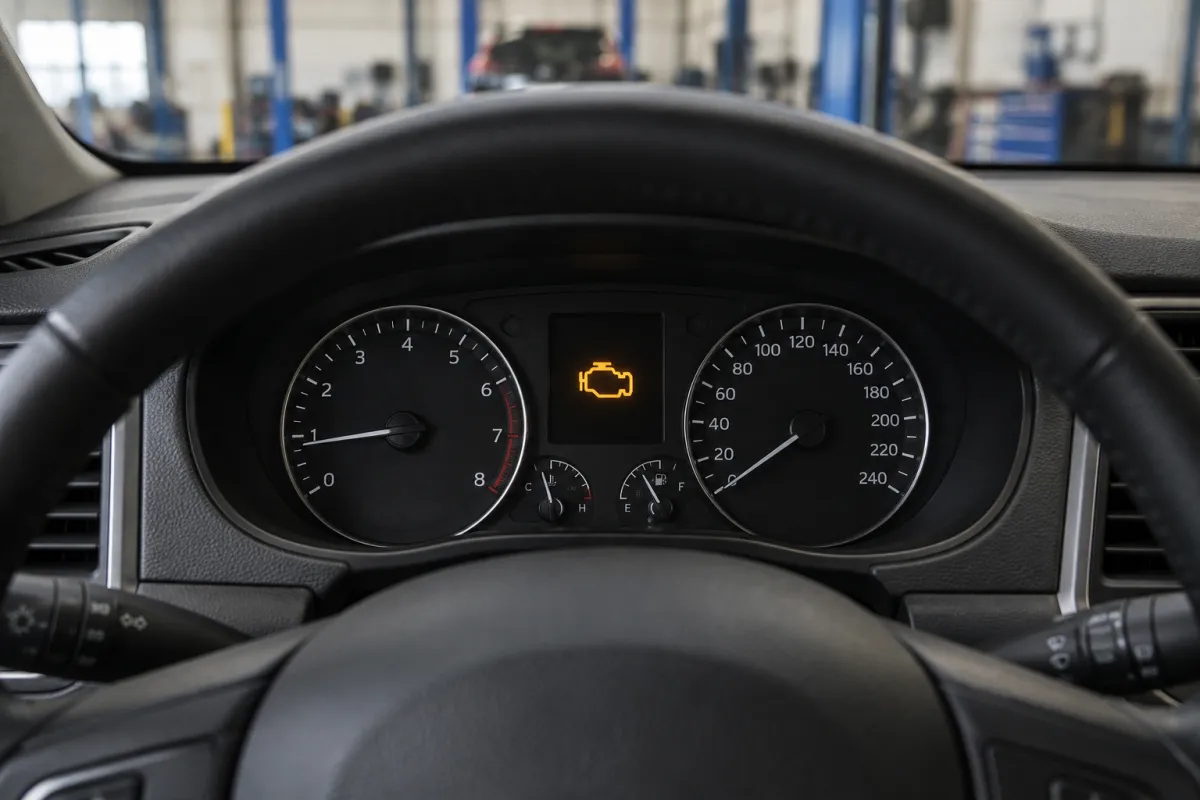
It means the electronic management system has detected operation outside expected values and stored fault information. This can relate to the engine, ignition, fuel supply, sensors or emissions, among other systems.
Key points
- The warning light does not automatically identify a part that needs replacing.
- Vehicle behaviour and other warnings matter.
- Reading the fault code starts the diagnostic process; it is not the whole diagnosis.
- A red warning or abnormal operation requires greater caution.
What the vehicle has detected
Modern vehicles monitor many parameters through sensors and electronic control units. When a value falls outside the expected range, the control unit may store a fault code and illuminate the engine-shaped warning light.
The DGT explains that some faults can trigger an emergency or protective mode and reduce power. The purpose is to warn the driver and protect the system, but there are many possible causes.
What to do when it comes on
Notice whether the car loses power, vibrates, produces smoke, overheats, makes unusual noises or shows other warnings. Consult the vehicle manual because the precise meaning and recommended response can vary.
If the vehicle behaves normally and the light is steady yellow, avoid demanding driving and arrange a check. If it flashes, red warnings appear, the temperature is excessive, there is a strong smell or smoke, or operation is clearly abnormal, stop safely and seek assistance before continuing.
Why clearing the warning is not enough
Clearing a code does not remove its underlying cause. It can also erase information useful for finding an intermittent fault. If the abnormality continues, the light will return.
Do not automatically replace a component mentioned in a generic code description. The same warning can involve connections, electrical supply, sensors, leaks, actuators or related mechanical problems.
How it is diagnosed
The process starts by establishing when the fault appears and how the vehicle behaves. Electronic fault memory is then read, parameters are analysed and targeted checks are carried out.
With ReBorn Diagnosis, we explain what we have found and the action we recommend before proposing a repair.
Common questions
Can I drive with the engine warning light on?
It depends on the warning, symptoms and vehicle manual. If there is a marked loss of power, smoke, overheating, unusual noises or red warnings, stop safely and seek assistance.
Does the code tell me which part to replace?
Not necessarily. It identifies a detected circuit or condition that must be interpreted and checked.
Will disconnecting the battery fix the problem?
No. It may erase information or temporarily clear warnings, but it does not repair the cause.
Sources and technical references
Specific recommendations depend on the vehicle.
Is a warning light on?
Tell us which warning appears and what you notice while driving. We will review the vehicle information to identify the cause.